
Organic (nacre) · June birthstone
Pearl
The only gem made by an animal, judged by lustre before size.
- Hardness
- Mohs 3
- Toughness
- Fair
- Daily wear
- Careful daily wear
- Price tier
- USD Strands from 200 to 20,000+ per carat, fine quality
- Colours
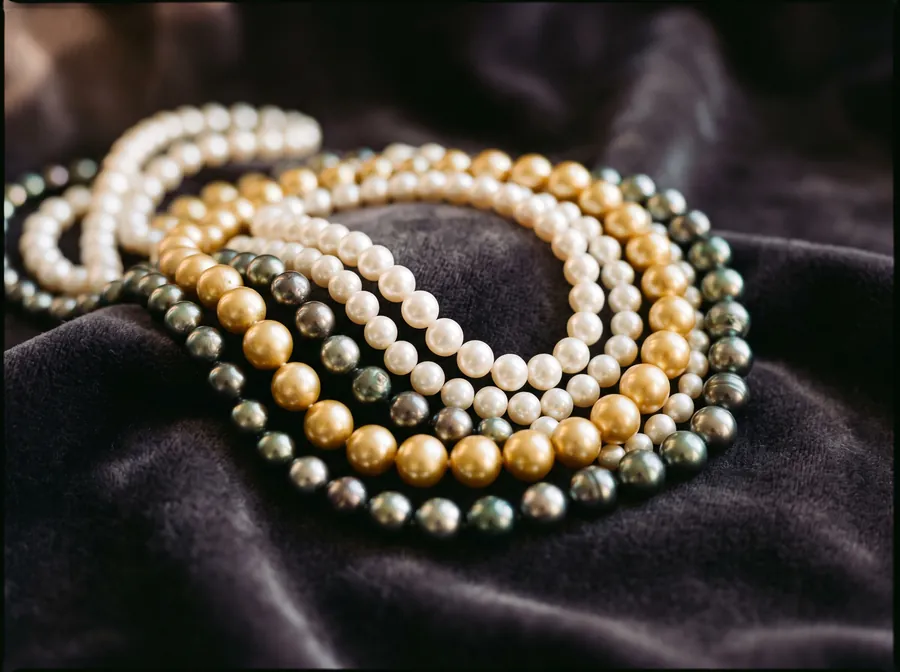
- White, Cream, Golden, Grey and black (Tahitian), Pink and lavender
- Origins
- Japan (Akoya), Australia and Indonesia (South Sea), French Polynesia (Tahitian), China (freshwater)
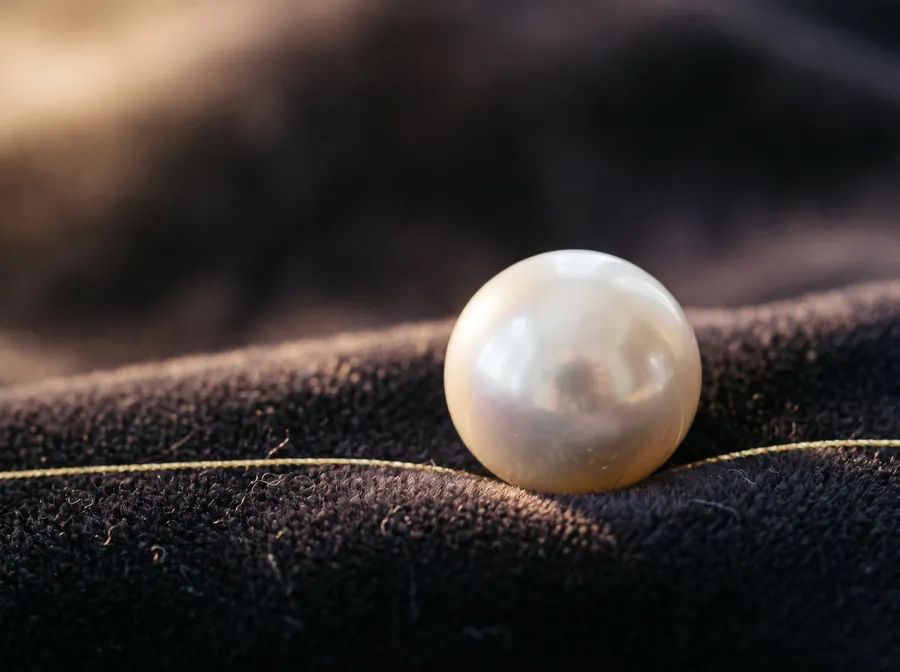
Pearls are layers of nacre laid down by molluscs around an irritant or, in cultured pearls, an implanted bead. Akoya pearls are the classic white strand, South Sea pearls the largest and most valuable, Tahitian pearls naturally dark, and freshwater pearls the best value. Lustre, the sharpness of reflections, matters more than size, and nacre thickness decides how long it lasts.
How to buy pearl
Judge lustre under a single light, then surface, shape, colour and matching. Freshwater and Akoya strands offer the best value; South Sea and Tahitian pearls are for size and drama. Test for imitation by rubbing two pearls together: real ones feel slightly gritty.
Treatments
Bleaching and light dyeing are common in Akoya and freshwater pearls; natural pearls are X-rayed to prove origin.
Care
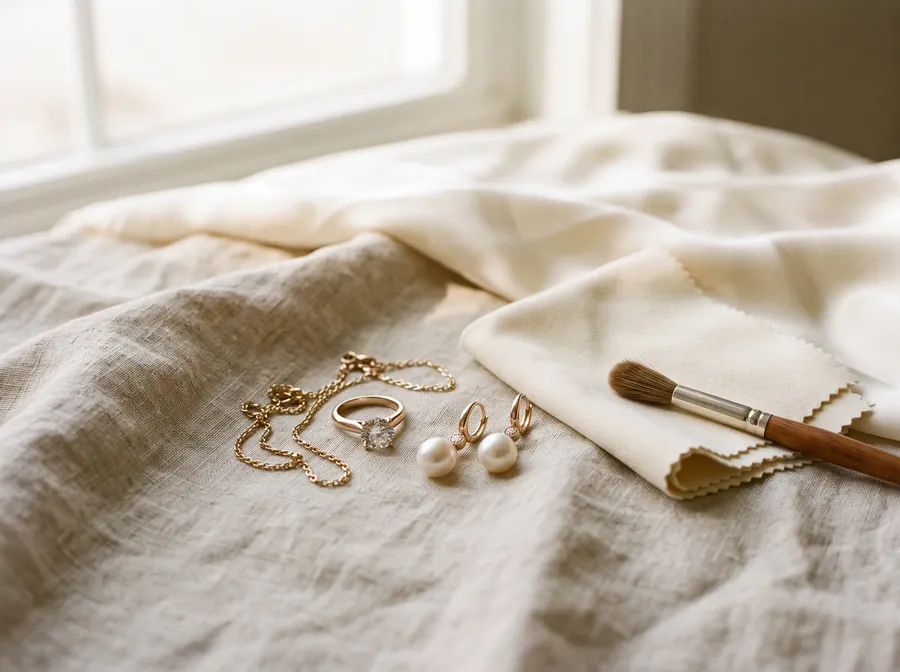
Wipe with a damp cloth after wearing; never soak, never expose to perfume, hairspray or acids; restring strands every few years.
Lore
Roman generals paid for campaigns with pearls; until cultured pearls arrived in the 1920s, a matched natural strand cost more than a Fifth Avenue mansion.