
Carbon · April birthstone
Diamond
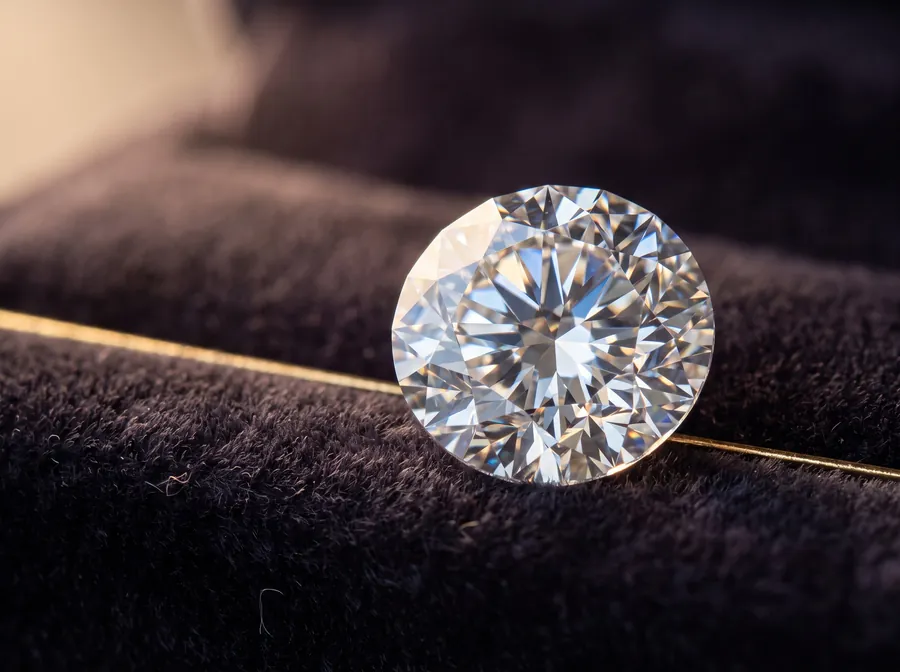
The hardest natural material and the most examined object in jewelry.
- Hardness
- Mohs 10
- Toughness
- Good
- Daily wear
- Excellent for daily rings
- Price tier
- USD 4,000 to 25,000 per carat, fine quality
- Colours
- Colourless, Fancy yellow, Fancy pink, Fancy blue
- Origins
- Botswana, Russia, Canada, South Africa
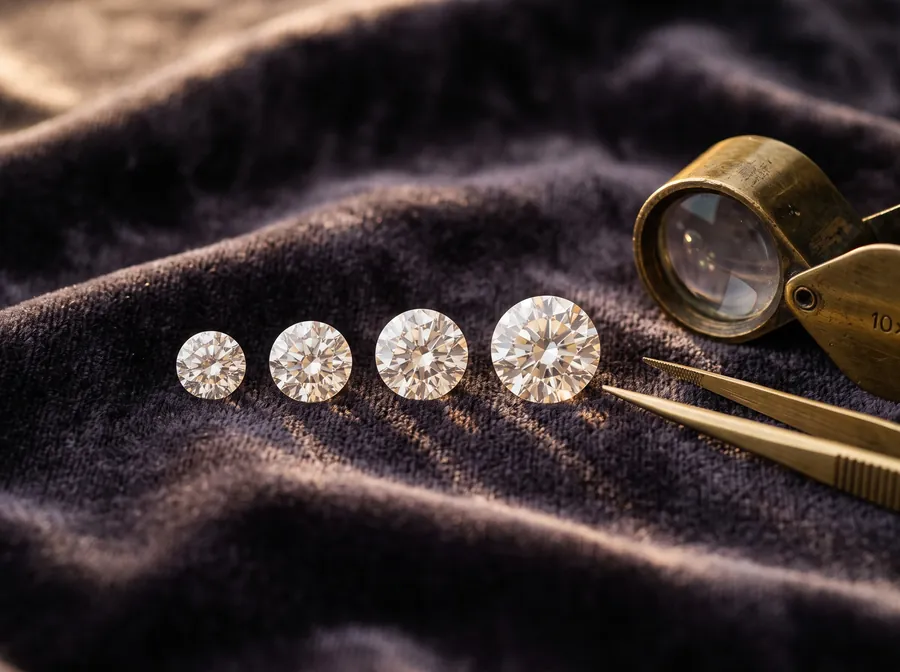
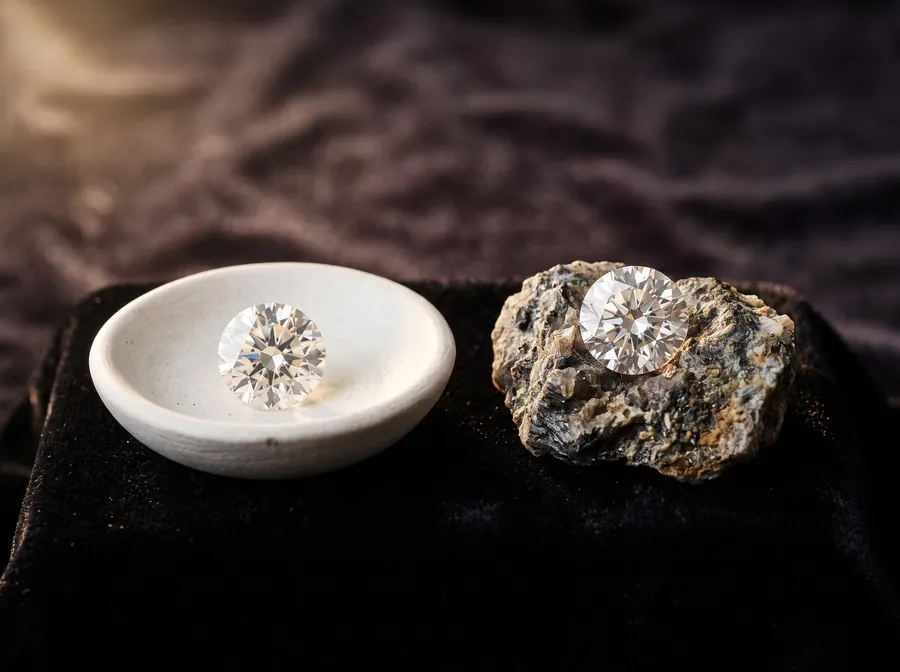
Diamond is crystallised carbon formed deep in the mantle over a billion years and brought up in volcanic pipes. It is graded on cut, colour, clarity and carat, sold on laboratory reports and, in fine qualities, holds a resale market that no other stone matches. Lab-grown diamonds are chemically identical and cost a fraction.
How to buy diamond
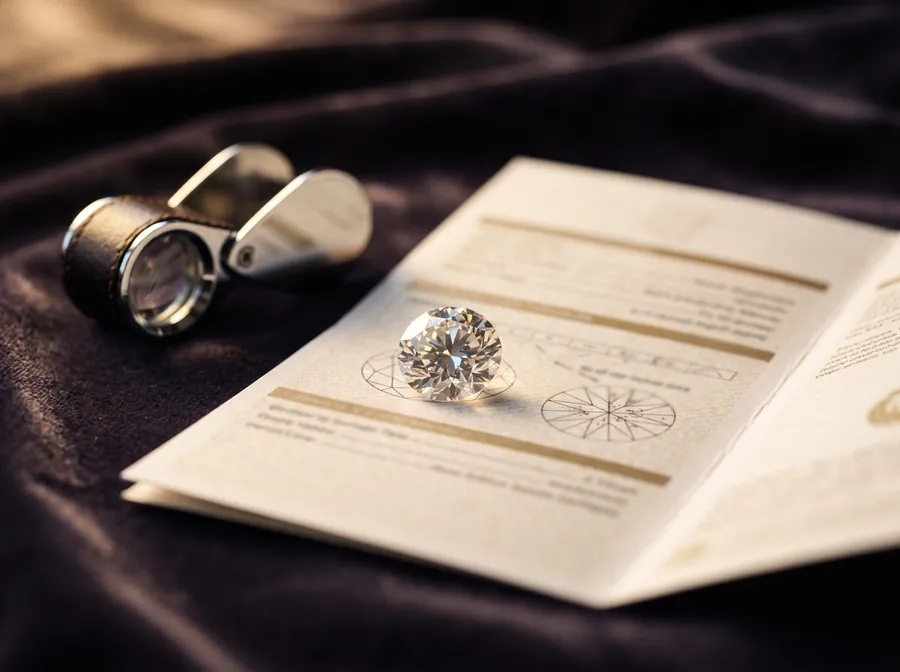
Spend on cut, accept near-colourless (G to J) and eye-clean (VS2 to SI1) grades, buy just under the round-number carat weights, and insist on a GIA, IGI or HRD report that states natural or laboratory-grown origin.
Treatments
Usually none; some are laser-drilled, fracture-filled or HPHT-treated (must be disclosed).
Care
Warm soapy water and a soft brush; ultrasonic and steam are safe for untreated stones.
Lore
Traditionally the stone of invincibility; the Greek word adamas means unconquerable. The engagement ring convention is less than a century old.