The report, line by line
How to Read a Diamond Certificate (GIA, IGI, HRD)

A certificate turns a sales pitch into data. Learn to read one and you can compare stones between shops in minutes and spot the ones that should cost less.
Which laboratories matter
GIA (Gemological Institute of America) is the reference: strict, consistent and the basis of most price lists. HRD Antwerp is respected in Europe. IGI (International Gemological Institute) grades the majority of lab-grown diamonds and is widely used for natural stones too; its grading is considered slightly more generous than GIA’s on colour and clarity, which the trade prices in. Reports from a shop’s in-house gemologist or from little-known laboratories are not comparable and should not be priced as if they were.
The header
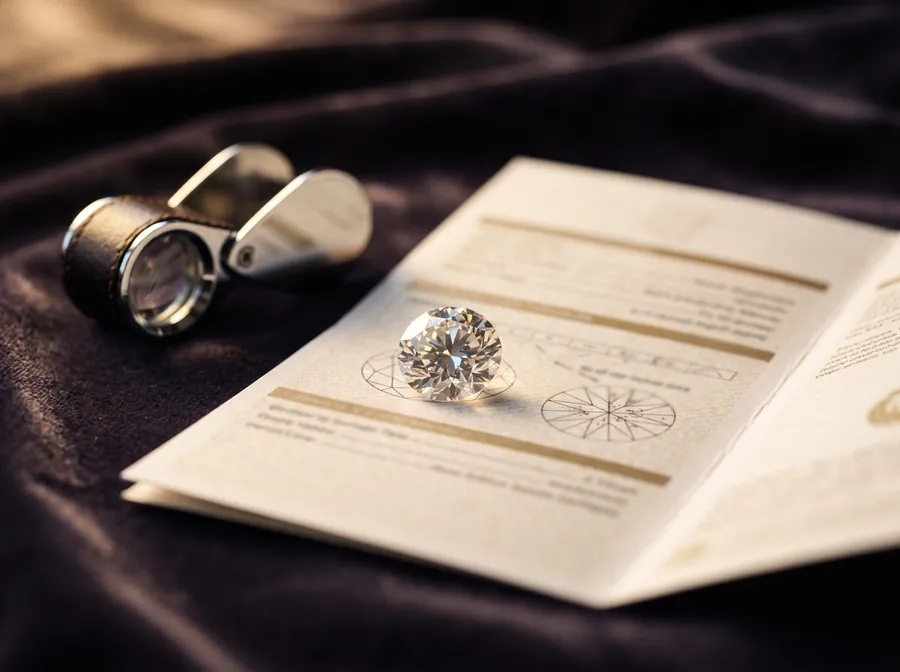
Report number, date, and the shape and cutting style. The report number is laser-inscribed on the girdle of most stones; a jeweler can show it to you under a loupe, and the number can be checked on the laboratory’s website.
Measurements
Length by width by depth in millimetres. This is the size you see; carat is only the weight. Two stones of identical weight can differ noticeably in diameter.
Grading results
Carat weight to two decimals, colour grade (D to Z), clarity grade (FL to I3) and, for round brilliants, a cut grade (Excellent to Poor). Below that, polish and symmetry, each also graded. For rounds, the trade shorthand “triple Excellent” means cut, polish and symmetry all at the top grade.
Proportions
Table percentage, depth percentage, crown angle, pavilion angle and girdle thickness. You do not need to memorise ideals; the cut grade summarises them. Two things are worth a glance: a very thick girdle hides weight you pay for but cannot see, and a very thin one chips.
Fluorescence
None, Faint, Medium, Strong or Very Strong, with the colour (usually blue). Medium and above are discounted. In stones graded G or lower, blue fluorescence can make the stone look whiter in daylight, which makes a discounted stone a good buy if it is not hazy.
The plot
A diagram of the stone with symbols marking inclusions. Feathers, crystals, clouds and pinpoints are common. What matters is where they sit: under the table, in the middle of the stone, they may be visible; near the edge, they can hide under a prong. A crack (feather) reaching the surface is a durability question.
Comments and origin
“Clarity grade is based on clouds that are not shown” is a warning sign for haziness. Lab-grown reports state the growth method (HPHT or CVD) and any post-growth treatment. Natural reports may state that the stone is untreated.
Questions people ask
Is a certificate the same as an appraisal?
No. A laboratory report describes the stone and gives no value. An appraisal states a value, usually for insurance, and is an opinion. See our guide on appraisal value versus offer value.
Can an old report be trusted?
Grades do not change, but a stone can be damaged after grading. For reports older than a few years, ask for a fresh inspection.
What if the stone has no report?
For a stone above half a carat, ask the jeweler to send it to GIA or IGI before you buy. If they refuse, the reason is usually the grade.