Clean, check, store, insure
Caring for Fine Jewelry at Home

Most lost diamonds were loose for months first. Ten minutes a month of cleaning and checking keeps fine jewelry bright and, more importantly, whole.
Cleaning by material
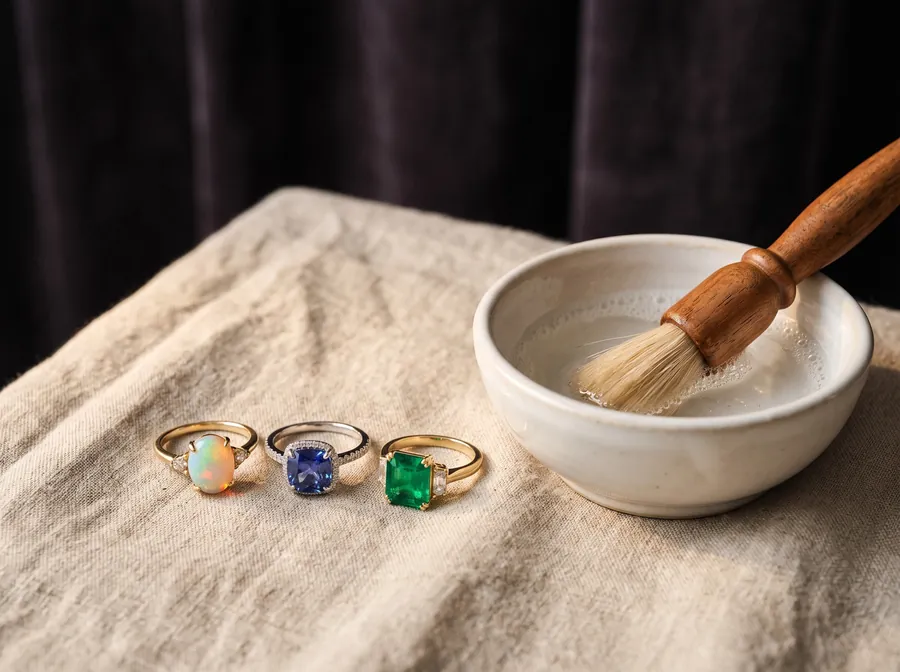
- Gold and platinum with diamonds, sapphires, rubies: warm water, a drop of dish soap, a soft toothbrush, especially behind the stone where skin oils collect. Rinse over a closed drain. Dry with a lint-free cloth.
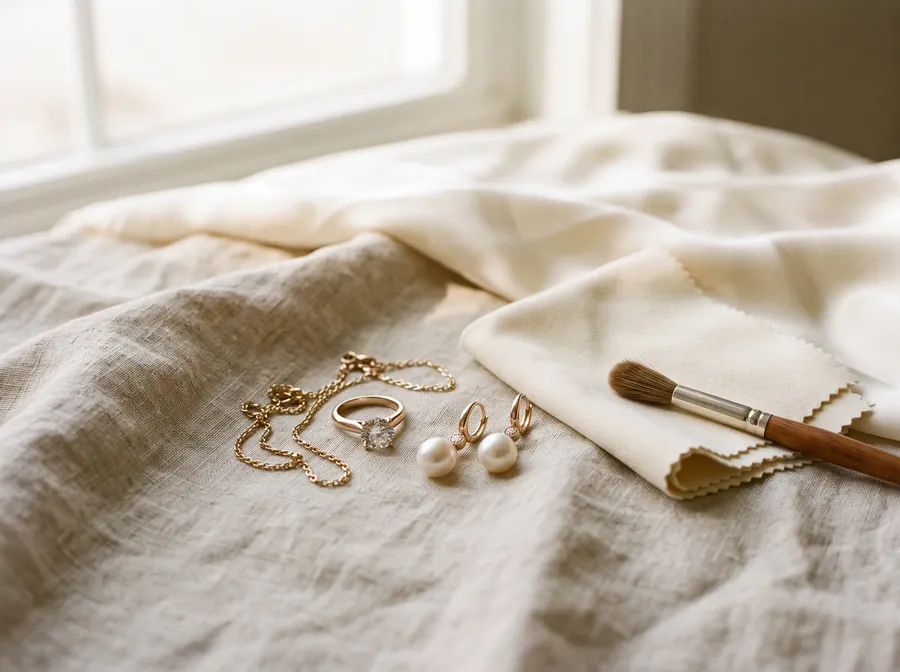
- Silver: a silver polishing cloth for tarnish; a silver dip only for plain pieces without stones or oxidised details.
- Emerald, opal, pearl, turquoise, coral, tanzanite, treated stones: a damp cloth only. No soaking, no brushes with pressure, no heat, no ultrasonic, no steam.
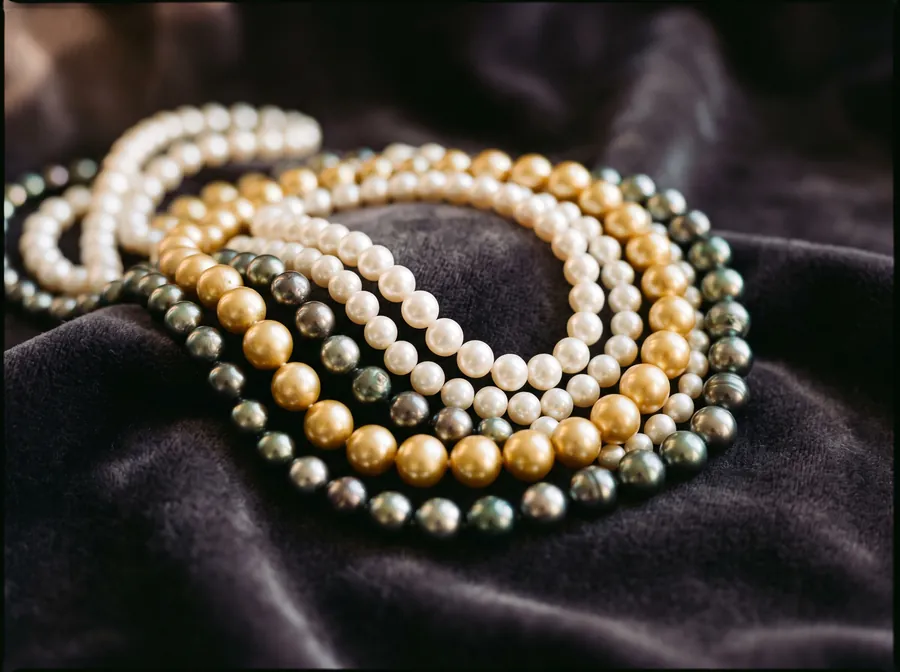
- Pearls: wipe after wearing, never submerge, restring when the silk stretches.
- Rhodium-plated white gold: gentle cleaning only; abrasives strip the plating.
Ultrasonic and steam cleaners
Safe for diamonds, sapphires, rubies, spinels and plain metal in good condition. They loosen dirt and loose stones alike, so check prongs first. Never for fracture-filled diamonds, emeralds, opals, pearls, tanzanite, turquoise or any stone with visible inclusions reaching the surface.
The monthly check
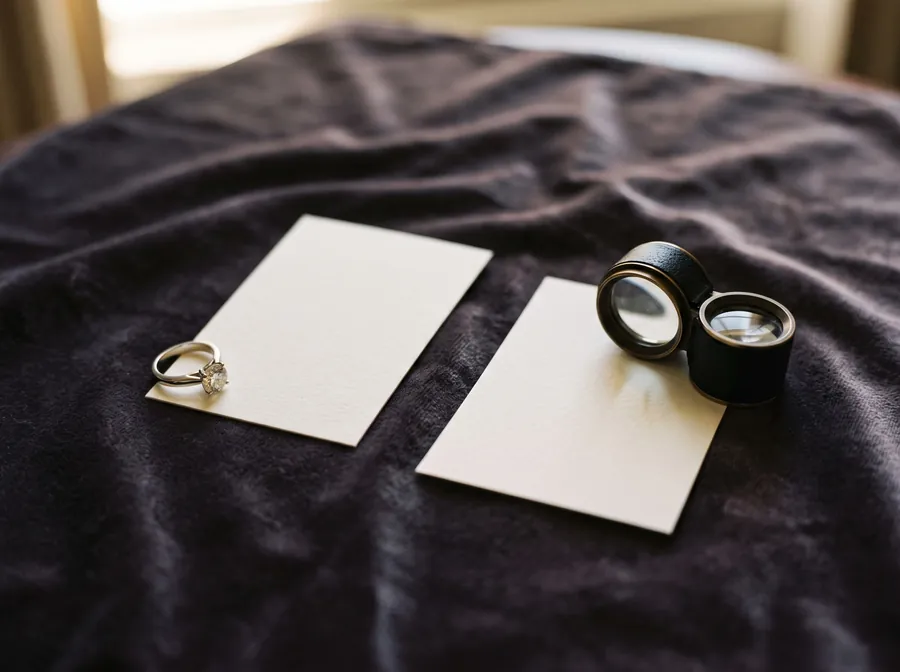
Under a bright light, with a loupe if you have one: tap the piece near your ear and listen for a rattle; push each stone gently with a fingernail; look at prong tips for wear or bending; check clasps, jump rings and chain links; look at earring posts and backs. Any movement, any thin prong, any open link goes to a jeweler that week.
Storage
Separately: diamonds scratch everything, including other diamonds. Soft pouches or a lined box with compartments. Chains hung or laid flat to avoid knots. Pearls in cloth, not plastic. Silver in anti-tarnish cloth or bags. Keep pieces away from heat, sunlight (amethyst, kunzite and some pearls fade) and humidity swings (opal).
Wearing habits
Rings off for sport, gardening, cleaning, swimming (chlorine attacks gold alloys and cold water shrinks fingers), cooking and sleeping. Last on, first off for everything: perfume, lotion and hairspray are the enemies of pearls, porous stones and rhodium.
Professional care
Once a year, or before a big occasion, have pieces professionally cleaned and inspected; most jewelers do it free or for a small fee. Re-tipping prongs, re-plating white gold, restringing pearls and repolishing platinum are routine, inexpensive and cheaper than a lost stone.
Insurance and records
Photograph every piece, keep receipts, reports and appraisals in one place and insure on a policy that covers loss, not just theft. Appraisals should be updated every few years as metal and stone prices move; our appraisal guide explains what the number means.
Questions people ask
Can I clean jewelry with toothpaste or baking soda?
No. Both are abrasive and dull polished metal and soft stones. Dish soap and warm water do the job without harm.
How often should white gold be re-plated?
When it starts to look faintly yellow, typically every one to three years for a daily ring. It is a quick, inexpensive job.
Is it safe to sleep in jewelry?
Studs and a plain band, yes. Chains, dangling earrings and rings with prongs catch on bedding and bend.