Lustre before size
Pearls: Akoya, South Sea, Tahitian, Freshwater

Pearls are the only gem made by an animal, and the only one that dies of neglect. Choosing them is about lustre, not size, and caring for them is a habit rather than a chore.
What matters in a pearl
Lustre first: the sharpness of reflections on the surface, from a soft glow to a mirror. Then surface, the absence of spots and pits. Then shape: round is rarest; near-round, drop, baroque and circled are cheaper and often more interesting. Then colour and overtone, the tint that floats over the body colour. Then size. Then, for strands, matching. Nacre thickness, the depth of the pearl layer over the bead nucleus, decides how long the lustre lasts.
Akoya
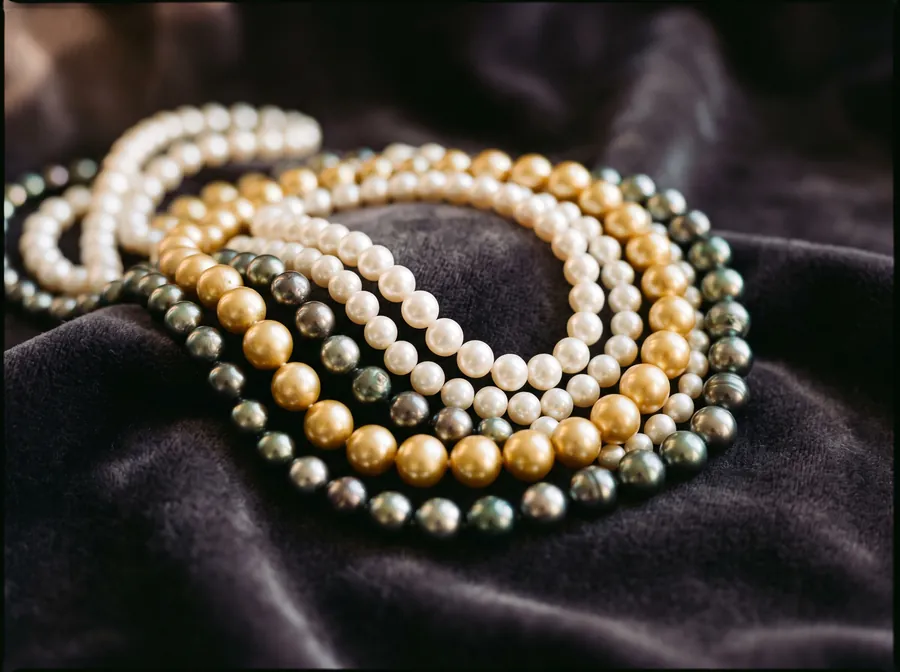
Saltwater pearls from Japan and China, 6 to 9 millimetres, classic white or cream with rose or silver overtones, the sharpest lustre of all pearls. The strand your grandmother wore. A good 7-millimetre strand costs from the high hundreds; top quality (Hanadama grade) runs into thousands.
South Sea
From Australia, Indonesia and the Philippines, 9 to 16 millimetres, white, silver or gold, with a soft, satiny lustre and thick nacre. The largest and most expensive cultured pearls: fine strands start in the low thousands and rise steeply with size and golden colour.
Tahitian
From French Polynesia, 8 to 14 millimetres, naturally dark: grey, green, aubergine, peacock. Dramatic in a strand, elegant as a single pendant. Prices between Akoya and South Sea.
Freshwater
From Chinese lakes, 5 to 13 millimetres, mostly nacre through and through, in white, pink and lavender. Once cheap and irregular; the best modern freshwater pearls (Edison, metallic) rival Akoya at lower prices. The best value in pearls.
Natural, cultured, imitation
Almost all pearls sold today are cultured: a bead or tissue is inserted into the mollusc and the pearl grows around it. Natural pearls, formed without help, are rare, X-rayed to prove it and priced like fine gemstones. Imitations are glass or plastic coated with pearl essence; rub two together and they slide, while real pearls feel slightly gritty, and look at the drill hole for a coated edge.
Care
Last on, first off: put pearls on after perfume, hairspray and make-up and take them off before washing. Wipe with a soft damp cloth after wearing. Store flat in a cloth pouch, never in a sealed plastic bag, because pearls need moisture. Have strands restrung every few years, knotted between each pearl, on silk.
Questions people ask
How much should a good pearl strand cost?
A fine Akoya or freshwater strand from a few hundred to two thousand; South Sea and Tahitian strands from two thousand upwards. Beyond that, you pay for size and perfection.
Do pearls hold their value?
Fine natural pearls and top South Sea strands do; ordinary cultured pearls do not, because supply is steady. Buy them to wear.
Can pearls be worn every day?
Earrings and pendants, yes. Strands and bracelets, with care: they are soft, dissolved by acids and scratched by everything.