What is ticking inside
Automatic, Manual, Quartz: Movements Explained

The movement is the part of a watch you never see and mostly pay for. Knowing what is inside tells you what the watch will cost to own and why some cost ten times more than others.
Manual winding
The oldest kind: you turn the crown, a mainspring stores the energy, a gear train releases it through an escapement that ticks several times a second, and a balance wheel keeps the beat. Wind it every morning; power reserves run from forty hours to over a week. Manual movements are thin, elegant and the choice for dress watches and for people who enjoy the ritual.
Automatic winding
A manual movement with a weighted rotor that spins as your wrist moves and winds the mainspring for you. Worn daily, it never stops; left in a drawer, it stops in a day or two and needs setting. Slightly thicker than manual movements. The standard for sports and everyday watches.
Quartz
A battery makes a quartz crystal vibrate at a precise frequency, an integrated circuit counts the vibrations and a small motor moves the hands. Accurate to a few seconds a month against a few seconds a day for mechanical movements, cheap to make and cheap to run. High-end quartz movements exist and are perfectly respectable, but the mechanical watch is the luxury object because it is harder to make and a pleasure to own.
In-house or supplied
Many brands buy movements from specialist makers such as ETA, Sellita or Miyota and finish them to their own standard. Others design and make their own. In-house movements are a point of pride and often of price; supplied movements are robust, cheap to service and easy to repair anywhere. For a first watch, a well-finished supplied movement is not a compromise.
Complications
Anything beyond hours, minutes and seconds: date, day, chronograph, GMT, moonphase, power reserve indicator, annual and perpetual calendar, minute repeater, tourbillon. Each adds parts, thickness and cost. A date and a second time zone are the complications people actually use.
Service
Every five to ten years a mechanical movement is taken apart, cleaned, oiled, worn parts replaced and the case resealed. Expect several hundred for a simple movement from an independent watchmaker, and well over a thousand from the manufacturer for complicated pieces. Quartz watches need a battery every two to five years and a seal check.
Judging a movement
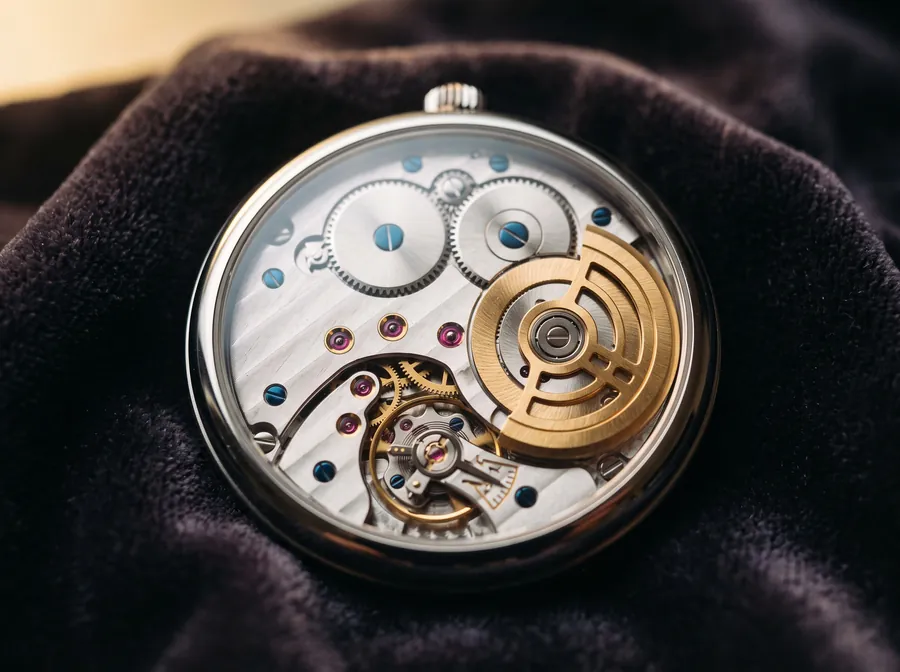
Look through the case back if there is one. Even finishing on bridges, polished screw heads, bevelled edges and a smooth rotor tell you someone cared. Ask about accuracy: a chronometer certificate (COSC) guarantees a mechanical movement to within a few seconds a day. Ask about parts availability: a movement from a specialist maker will be serviceable for decades.
Questions people ask
Is a quartz luxury watch worth buying?
For accuracy and low maintenance, yes. For resale and for the pleasure of mechanics, a mechanical movement holds value better.
Does an automatic watch need a winder?
Only if you own several and want them all running. Otherwise, wind and set it when you put it on; it takes a minute.
What does COSC mean?
The Swiss chronometer testing institute. A COSC-certified movement has been tested to run within minus four to plus six seconds a day.