Inspect before you pay
The Pre-Owned Watch Checklist

A pre-owned watch is a bargain or a lesson, and the difference is fifteen minutes with a loupe and this list.
1. Papers, box, serial number
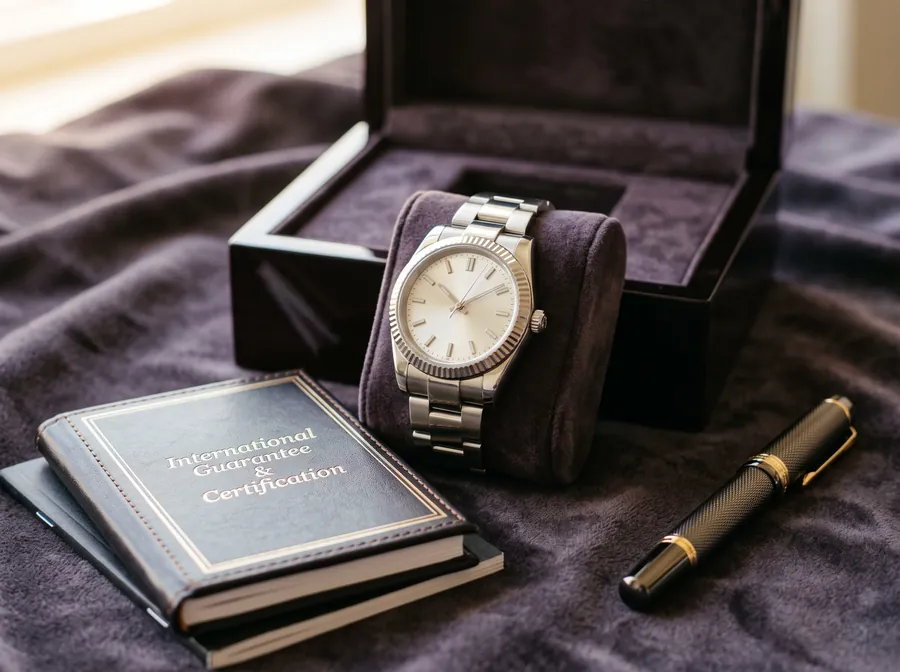
The warranty card or certificate should show the serial number stamped on the case. Compare them. A full set (box, papers, hang tags, booklets) adds value and reduces the risk of a stolen watch. Check the serial number against the brand’s known production years and against stolen-watch registers.
2. The case
Look at the edges. Over-polished cases have soft, rounded lugs, uneven bevels and thinner-than-original profiles. Light polishing is normal; heavy polishing lowers value, especially on vintage pieces where collectors pay for sharp, original cases.
3. The dial and hands
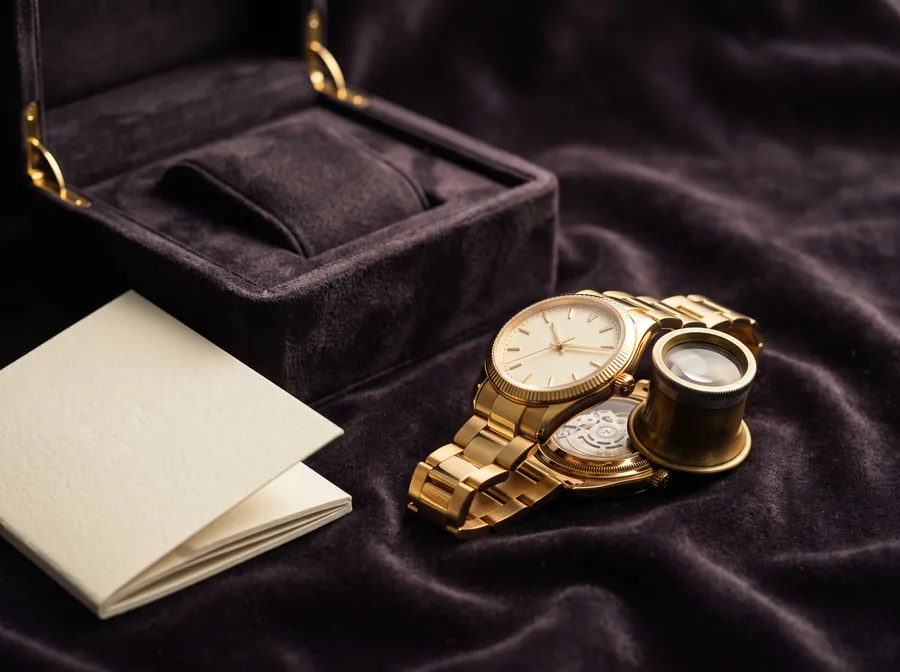
Under a loupe, printing should be crisp, luminous material should match on dial and hands, and there should be no moisture spots or corrosion. Replaced dials and hands are common on serviced vintage watches and can halve their value; original, evenly aged parts are worth more than pristine service replacements.
4. The crystal and bezel
Sapphire crystals should be free of chips at the edge. Bezel inserts should match the watch’s era; faded originals on vintage sports watches are prized, replacement inserts are not.
5. The movement
Ask the seller to open the case back or to show photographs. Rust, scratches on screw heads and mismatched parts are warning signs. Listen and feel: a smooth rotor, a crown that winds without grinding, hands that set cleanly.
6. Timekeeping
A timing machine shows rate, amplitude and beat error in thirty seconds. Any reputable dealer has one. A watch running more than a few seconds a day off, or with low amplitude, needs a service, which costs several hundred to well over a thousand for high-end pieces.
7. The bracelet
Hold the bracelet horizontally: sagging shows stretched links and worn pins. Count the links against the original configuration; missing links cost money to replace. Check the clasp closes firmly and that the bracelet reference matches the watch.
8. Water resistance
A pressure test takes minutes and reveals dried gaskets. Never trust the depth rating on an untested pre-owned watch.
9. Service history
Receipts from the manufacturer or a certified watchmaker with dates and parts replaced. A recent service from the brand is worth money; a service from an unknown source needs verification.
10. Provenance and price
Ask where the watch came from. Compare the asking price with completed sales, not listings. Our Watch Valuation tool gives a range for common references.
11. The seller
Dealers with a physical address, a warranty and a return policy cost a little more and are worth it. Private sales through escrow services are fine for experienced buyers. Marketplace sellers with no history, stock photographs and pressure to pay by transfer are not.
12. Your exit
Before you buy, know what you could sell it for. If the answer is more than twenty percent below the asking price, you are paying for the dealer’s margin and should negotiate.
Questions people ask
Is a watch without papers worth buying?
Yes, at a discount of ten to twenty percent for modern pieces, and only after checking the serial number against stolen-watch databases. For vintage watches, papers are rare and originality matters more.
What does “unpolished” mean and why does it matter?
The case has never been polished and keeps its original edges and brushing. Collectors pay a premium because polishing removes metal and can never be undone.
Should I buy a pre-owned watch that needs a service?
Only with the service cost deducted from the price and only for watches whose parts are still available.