Karats, fineness, colour
24K, 18K, 14K: Gold Purity Explained

Gold purity is the one number in jewelry with a public price behind it. Learn to read it and every gram of gold you own becomes a figure you can check on this site.
Karat and fineness
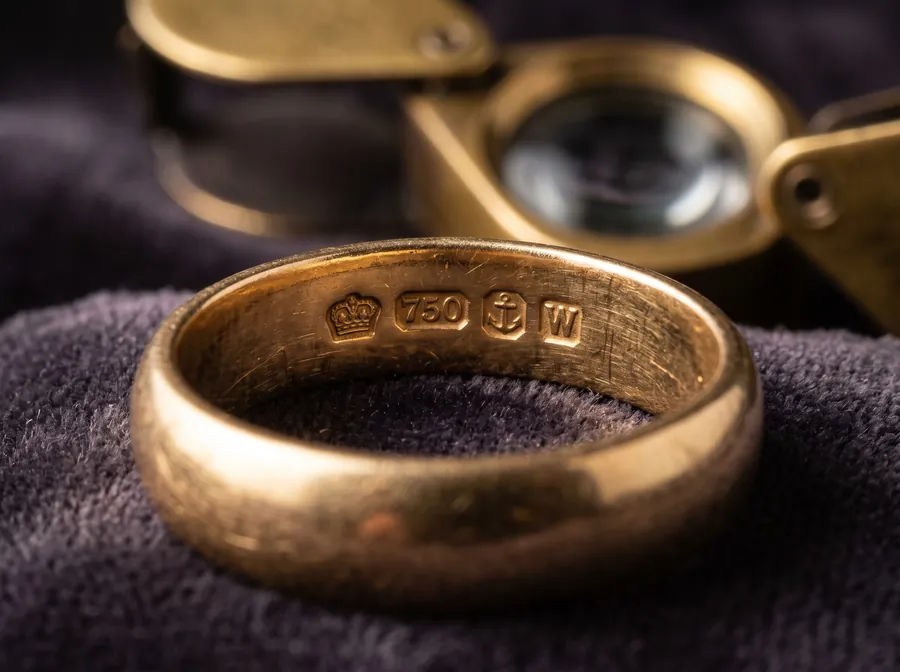
Karat (K or kt) measures gold purity in twenty-fourths: 24K is pure gold, 18K is eighteen parts gold and six parts other metals, 14K is fourteen parts in twenty-four. Fineness expresses the same thing in parts per thousand and is what is stamped on most European pieces: 999 (24K), 916 (22K), 750 (18K), 585 (14K), 375 (9K). The two systems describe identical metal.
Why pure gold is rarely worn
Pure gold is soft, bends under a fingernail and wears away at prongs and clasps. Alloying with copper, silver, zinc, palladium or nickel makes it hard enough for daily use. 22K is common in India and the Middle East and in coins; 18K is the standard for fine jewelry in Europe; 14K dominates in North America because it is harder and cheaper; 9K is common in the United Kingdom and is the minimum that may legally be called gold there.
Colour comes from the alloy
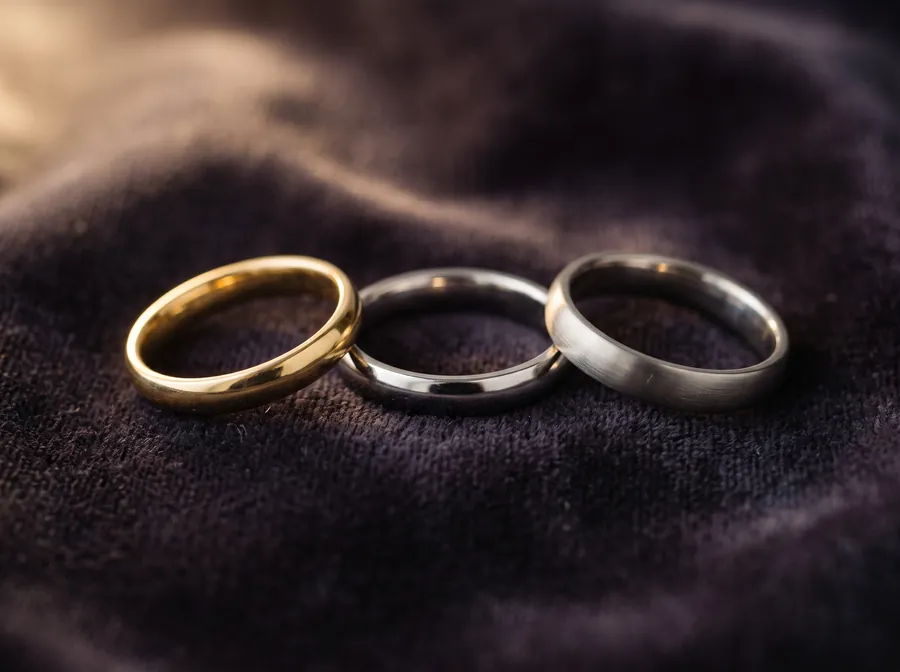
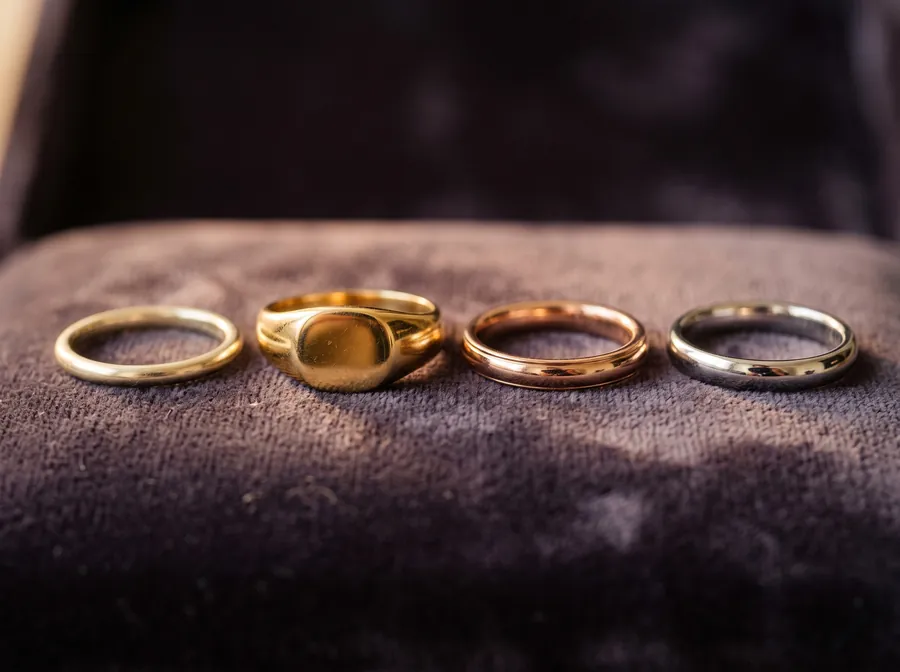
Yellow gold keeps a balance of silver and copper. Rose gold uses more copper; the pinker, the more copper. White gold uses palladium or nickel and is usually plated with rhodium, a bright white metal that wears off after a year or two and is re-plated for a small fee. Green gold uses silver only. All of these can be 18K or 14K; colour says nothing about purity.
From purity to value
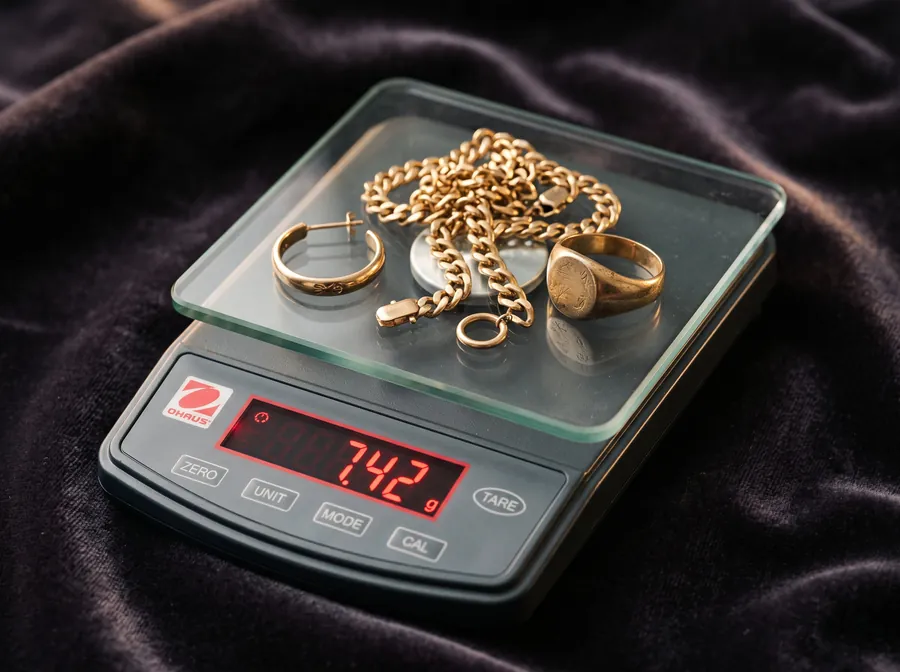
The fine gold value of a piece is weight in grams multiplied by purity multiplied by the spot price per gram. An 18K ring weighing 6 grams contains 4.5 grams of pure gold. At a spot price of 4,400 dollars per troy ounce, which is about 141 dollars per gram, that gold is worth about 636 dollars. Buyers of scrap pay a percentage of that figure; the Gold Calculator on this site does the arithmetic with live prices.
Purity and durability
Lower karat is harder, cheaper and slightly less rich in colour. For rings worn daily, 14K and 18K both work; 22K rings show wear within years. For chains and earrings, 18K is the sweet spot of colour and strength. For investment, 24K coins and bars are the only sensible form: purity is standardised and buyers pay close to spot.
Gold-plated, gold-filled, vermeil
Plated pieces carry a few microns of gold over base metal and have no metal value. Gold-filled pieces carry a thicker bonded layer, still worth little. Vermeil is gold plating over sterling silver. Stamps such as GP, GF, HGE or 1/20 12K mark these; they are not solid gold and no calculator should treat them as such.
Questions people ask
Is 18K better than 14K?
Richer in colour and more valuable per gram; softer and more expensive. For a daily ring, 14K is more practical; for a chain or a dress piece, 18K looks better.
Does white gold contain less gold?
No. 18K white gold contains exactly as much gold as 18K yellow; only the alloy metals differ.
What does 585 mean on a ring?
Fourteen karat: 58.5 percent gold. The European stamp for 14K.